

Poverty a major challenge to child health
January 26, 2017
Registration Begins for Health Governance Workshop
January 27, 2017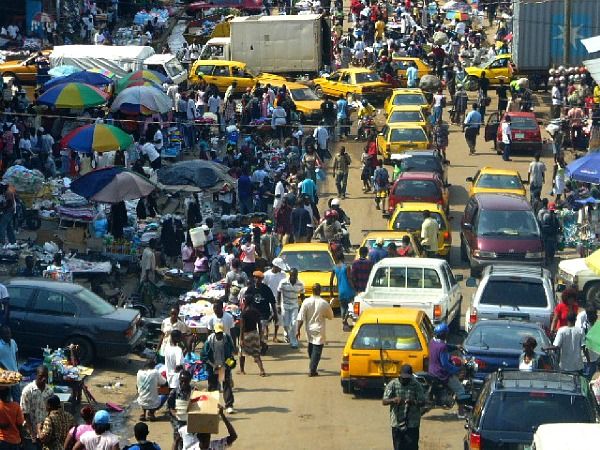
The role of government in African urbanization
The phenomenon of urbanization is a feature of modernization and development and it should be known that this process is often irreversible. The various configurations and effects that this process usually assumes, if unguided, often makes it economically, socially and environmentally costly. If badly managed urbanization could turn out to be dysfunctional and counter-productive to the objectives and goals of overall societal development and welfare. It therefore calls for a more deliberate and rational planning and guidance of the process demands committed political will on the part of the relevant governmental authorities if the objectives are to be effectively realized. Urbanization helps pull people out of poverty and advances progress towards the Millennium Development Goals (MDGs), but, if not properly managed, can also lead to burgeoning growth of slums, pollution, and crime with disastrous consequences.
It is a fact that there is a rapid increase in the rate of urbanization in Africa. It has risen from 15 percent in 1960 to 40 percent in 2010, and is projected to reach 60 percent in 2050 (UN Habitat 2010). This rapid expansion has changed the continent’s demographic landscape. Yet, urbanization in Africa has failed to bring about inclusive growth which, in turn, has resulted in proliferation of slums, urban poverty and rising inequality.
Understanding African urbanization is highly relevant in other domains as extreme poverty seem to be dominant in the rural areas than urban. Therefore, urbanization would seem to be a superior way to provide better services and livelihoods to millions. Over time, it is expected that the gap between urban and rural earnings will decline and eventually disappear, as surplus labor shrinks and the rural sector modernizes. But this will take a while to occur. As part of the process, it is important that governments provide basic services to smaller cities and intermediate towns that can facilitate the transition between rural and non-rural activities, the mobility of labor, and the generation of economic activity.
The fundamental features and challenges characterizing this phenomenon in African countries over this period include, among others:
- Continuing high rate of urban population growth;
- Mass poverty, particularly in urban centers.
- Weakness of urban management institutions reflected in their inability to adequately provide basic urban services.
- Unplanned and unregulated growth and expansion of cities and towns, resulting in large residential slums often unrecognized and not serviced by their local governments (Cities Alliance, 2006:2).
- Another challenge from Africa’s rapid urbanization is the increasing pressure of urban populations on natural resources and the environment.
The expansion of cities is generally at the expense of destruction of forests and other natural environment or ecosystems, and increasing pollution (especially air pollution) with the related diseases.
In order to address the challenges of urbanization facing many African cities, some key reforms should be pursued by governments. These reforms should include: firstly, the provision of integrated infrastructures and services that target the marginalized groups, including the poor, youth, women and elderly people. In addition, governments should act proactively to ensure orderly urban development by defining and implementing clear urban development strategies; secondly, the mobilization of urban financing from local and foreign investors. These resources should be efficiently and adequately allocated between central and local governments’ urban projects and should encourage strengthening the role of municipalities. Finally, improving human capital through equal access to education and healthcare services and facilities for all categories of citizens is a core reform that must be embraced by urban societies if sustainability must be achieved.
In line with the recommendations of the UN 2030 sustainability goals, these reforms should be more inclusive to ensure that all categories of citizens, regardless of their age, race, gender, ethnicity, or socio-economic conditions, have equal access to adequate housing, basic infrastructure and services as well as equal job opportunities.