
suliver-logo-blue-white-smallsuliver-logo-blue-white-smallsuliver-logo-blue-white-smallsuliver-logo-blue-white-small
  • Home
  • Resources
  • Get Involved
    • Volunteer
  • Contact Us
  • Home
  • Home
  • Home
  • Home
  • Home
  • Contact
  • Contact
  • Contact
  • Contact
  • Contact
  • Contact
  • Shop
    • Shopping Cart
    • Checkout
  • Shop
    • Shopping Cart
    • Checkout
  • Shop
    • Shopping Cart
    • Checkout
  • Buy it now !
  • Buy it now !
  • Buy it now !
  • Buy it now !
  • Buy it now !
  • Buy it now !
✕
Heat stress: A sustainable health risk.
November 23, 2017
Impacts of China’s Ban on Solid Wastes Imports
January 14, 2018

.

COP23: Climate Diplomacy and our Collective Security
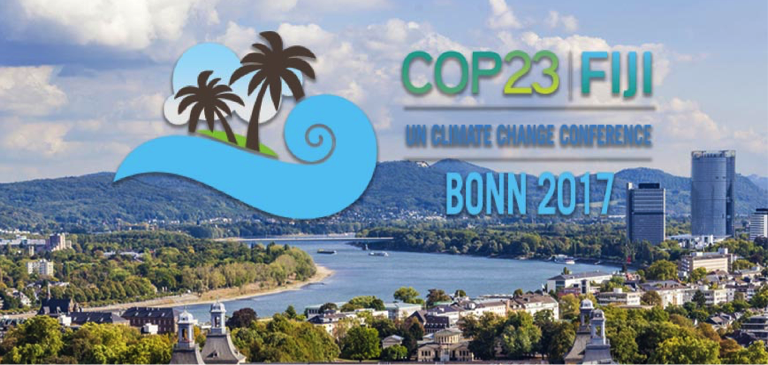
From November 6-17, 2018 the government of Fiji with the help of Germany hosted the 23rd United Nation Nations Framework Convention on Climate Change (UNFCCC) Conference of the Parties (COP23) in Bonn, Germany. Despite the announcement by President Donald Trump to pull the United States out of the Paris Climate Accord, academics, diplomats and development experts met with the resolve to work together for a common good. Different countries around the world, including the U.S, are experiencing the worst storm seasons in history.
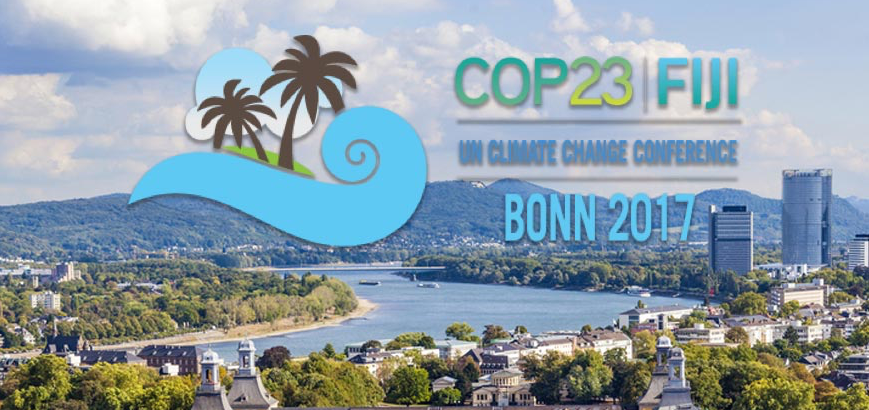
COP 23 Logo

The COP23 is a follow-up to the 2015 Paris Climate Conference (COP21), which sets out a global agenda to put the world on track to avoid catastrophic impacts of extreme weather conditions by limiting global warming. Among these weather conditions caused by climate change are sea level rise, extreme heat events and droughts, Hurricanes, Tornados and strong Typhoons. Studies by most climate scientists show that these weather conditions will not only continue, but will get worse.

COP23 sets guidelines on how to implement the Paris Agreement. It must be highlighted that the Paris climate agreement aim is to limit warming to 1.5 to 2 degrees Celsius above the pre-industrial levels. Parties to the Paris climate agreement also agreed to a long-term goal of adaptation. This means to increase the capability of countries, especially those in the global south, to adapt to the adverse impacts of the climate change and enhance climate resilience and low greenhouse gas emissions in ways that do not threaten food production. The agreement also created strategies for creating stream of funds to finance the reduction of greenhouse gas emissions and climate resilient development, especially in the developing countries of the world.
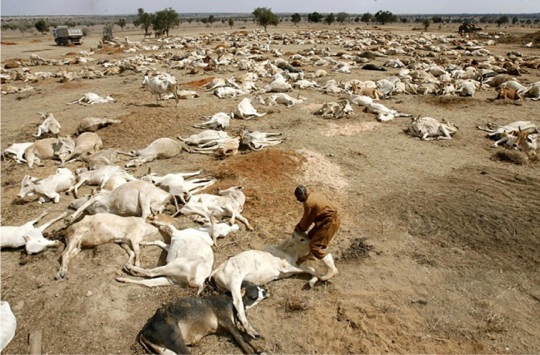
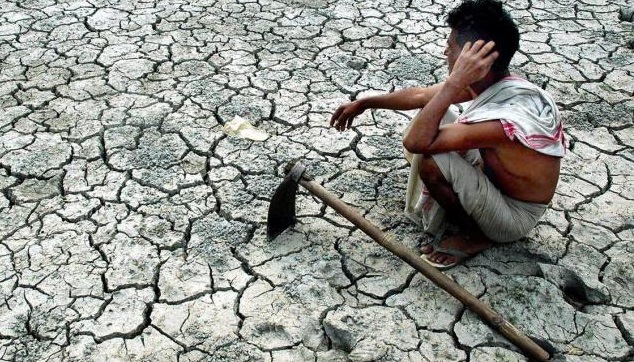
Climate Change impact in Africa – livestock

The Bonn gathering was a clear demonstration that climate diplomacy is well and alive. It also demonstrated an emerging multilateral leadership on global climate change negotiations in the absence of the U.S. As much as the rest of the world expects the U.S under President Trump to reconsider its stance on climate change, countries are resolved to forge ahead in the implementation of the Paris agreement without America.

Apart from being a time for negotiations, COP23 was a time for taking stock of recent development and events. It was a time for planning and negotiation for future actions. The Bonn gathering was also used to showcase some recent innovations and technological inventions that can be used to address the impacts of climate change and global warming in different parts of the world.

Unfortunately, the impacts of global warming cannot wait for diplomacy among nations as the world is currently experiencing the effects of global warming in different forms. COP23 was organized to define the implementation guidelines for the Paris agreement, which is to be finalized by December 2018. In specific terms, COP23 examined how the 196 countries, which are parties to the Paris climate treaty, are going to meet their Nationally Determined Contributions (NDCs). Article 4, paragraph 2 of the Paris Agreement requires each party to prepare, communicate and maintain successive NDCs that it intends to achieve through domestic measures. However, the challenge remains how poor countries, who are also the most vulnerable to the impacts of climate change are going to finance climate adaptation policies and projects.
Climate adaptation measures are urgently needed given that vulnerable countries, especially small island developing countries, and many in sub-Saharan Africa are already living with the devastating impacts of global warming. Therefore, a successful implementation of climate adaption measures will depend largely on the ability to mobilize international investment to fund the implementation of NDCs in poor countries. It is now clear that the cost of adapting to the realities of climate change will be higher. However, the cost of doing nothing about climate change will even be higher.
Wind Turbines Sustainability

Energy of the Future

Share

Related posts

December 31, 2018

Suliver Board Hosted by UNDP and The New York City Council


Read more
February 1, 2018

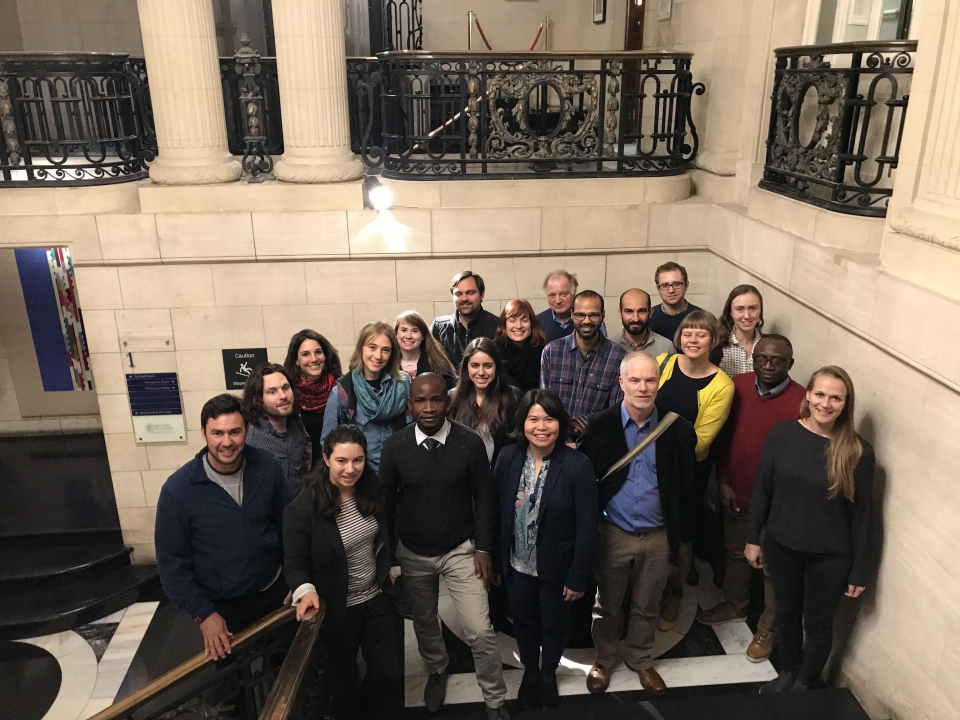
Early career researcher networks meet in London


Read more
January 28, 2018

Webinar Announcement: Climate Education, Enlightenment and Communication


Read more
Join our Global Network Today Suliver|Network, lets bridge the gap in Sustainability and Livelihood
© 2019 Suliver. All Rights Reserved:
The Sustainability and Livelihood Research Organization (Suliver)
is a U.S. 501 (c) (3) tax exempt public charity, non-profit.

Error: Contact form not found.

Cleantalk Pixel