
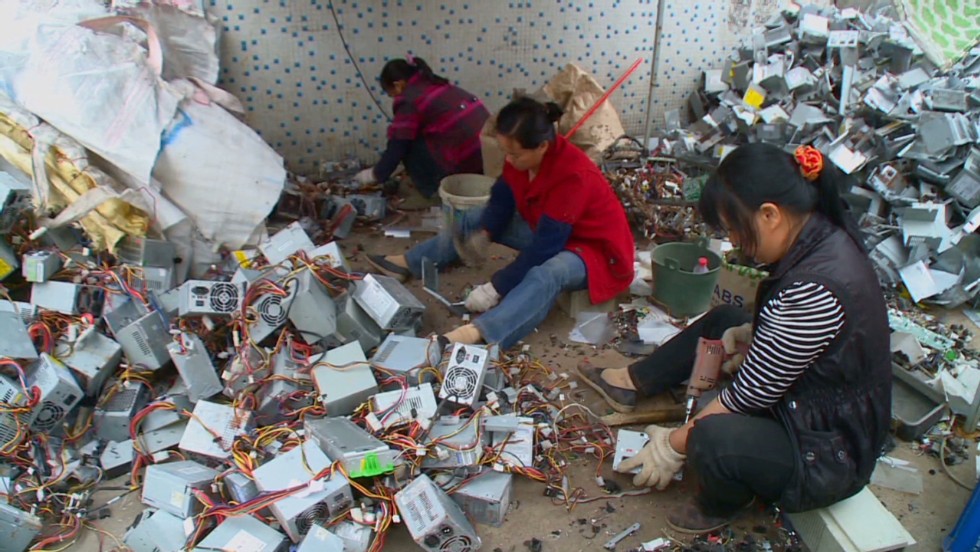
Impacts of China’s Ban on Solid Wastes Imports
January 14, 2018
Drying Dams of Capetown: The impending Global Water Crisis
March 2, 2018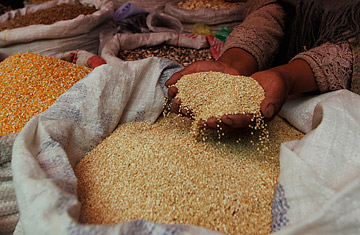
.
Quinoa: Staple Food to Superfood
Once believed to be a gift from the gods and now commercialized into a ‘super food’ the emerging market is taking a toll on the Andean smallholder farmers. Quinoa, often mistaken for a grain, is actually a chenopod (cousin to a beet); rich in minerals,
it’s the only vegetable that’s a complete protein. It has been the base of the Andean diet until recently when came into the international market.
In 1993, NASA researchers recommended it as part of a potential space-colony diet. Over the following decade, the food gained wider appeal, going from hippie hype to Costco convenient practically overnight. "Quinoa was in the eye of the storm," says Bolivian-born Sergio Núñez del Arco, founder of Andean Naturals, the U.S.'s largest quinoa importer, explaining that the product fit almost every recent health craze: whole grain, gluten-free, fair trade, organic. (Challapata)
Bolivia, Peru and Ecuador are the main producers of Quinoa for the international market with more than half Perus’ quinoa exports to the U.S. (see figure 1) Production remains family based, average plots range from 1 to 15 hectares (2.5 to 37 acres). Free of genetically modified organisms, or GMOs, Bolivia's export is 90% organic. Despite the prices of quinoa tripling since 2006, sustainability in one of the poorest regions in South America is now a main factor.

Challapata, Jean Friedman-Rudovsky. “Quinoa: The Dark Side of an Andean Superfood.” Time, 3 Apr. 2012
Mcdonell, Emma. “Nutrition Politics in the Quinoa Boom: Connecting Consumer and Producer Nutrition in the Commercialization of Traditional Foods.” vol. 3, no. 6, 2016, pp. 1–7. International Journal Of Food And Nutritional Science.